St. Andrew’s Episcopal Church
Our Story
Founded in 1860. Leveled twice. Raised again both times. This is the story of a parish made and remade.
Before there was a building, there were a few Episcopalians in Montevallo who gathered to pray in the Masonic Hall. In 1860, under the Rev. James F. Smith, they organized as a parish and raised a small English-style church on the rise above Shoal Creek, by most accounts on Shelby Street. The town was young. The congregation was smaller still.
In 1873 a tornado tore that first church to the ground. Only three Episcopalian families remained in Montevallo, and still they built again, raising a Gothic-style frame church on the same ground.
For decades St. Andrew’s was small and often hard-pressed for money, and tenacious all the same. In 1920 it became an organized mission, and Mr. Lee J. Clayton of the U.S. Attorney’s Office in Montgomery came out by train, Sunday by Sunday, by way of Calera, to lead worship for a handful of communicants. By the early 1920s the parish numbered seventeen souls, five of them children, with a scattering of college teachers and students who kept the lamps lit.
Through the Depression the giving thinned to almost nothing. In 1932 the treasurer, Houston Wills, wrote to Bishop William G. McDowell with plain regret: “at the present time it is next to impossible for me to get any money at all from the congregation.” The little parish held on anyway.
Then, in April 1939, a tornado destroyed the church a second time. Bishop Charles C. J. Carpenter walked the wreckage, and he did not soften what he found.
It looks as if a giant had picked it up, crushed it, thrown it to the ground, and then ground it under his heel. A complete loss.
The congregation was undeterred. They gathered in Calkins Hall on the campus of Alabama College, today the University of Montevallo, and began again. The Rev. Charles H. Douglass set about rebuilding the parish records lost in the storm by writing to churches across the country. Of everything the parish had owned, one Bible is known to have come through the wreckage.
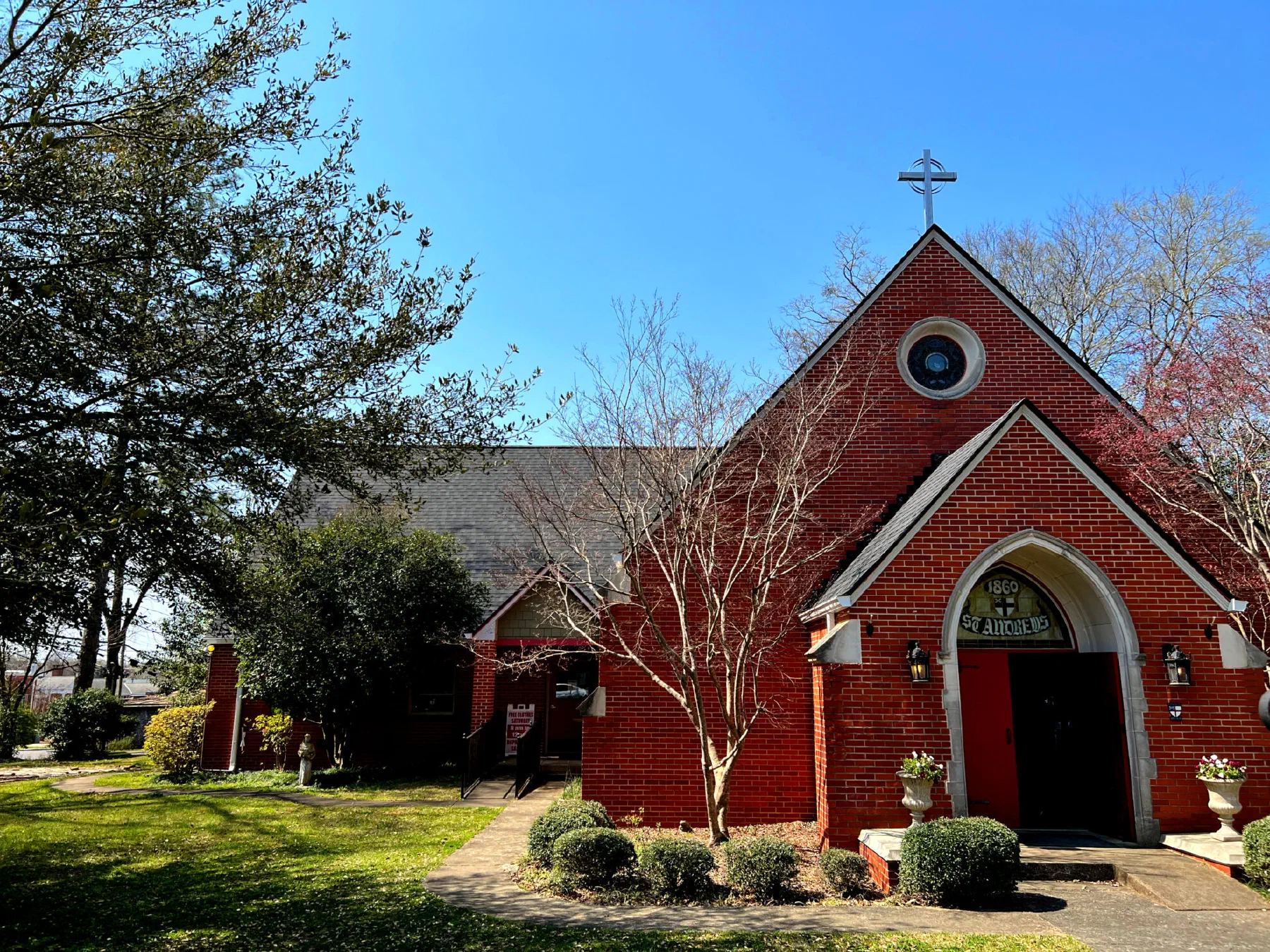
Through the 1940s and into the 1950s they raised the money dollar by dollar, with help from the diocese and the Woman’s Auxiliary, until a neo-Gothic brick church rose at the corner of Oak and Plowman, the parish’s third home and its first on that ground. In 1958 a hand-built Dutch organ, a Flentrop, left Rotterdam and arrived by ship at the port of Mobile, four crates weighing 2,264 pounds, and was carried inland. The musician who organized its first concert, John Fesperman, went on to become Head Curator of Musical Instruments at the Smithsonian. One of the singers that day, Polly Holliday, became a celebrated stage and screen actress.
St. Andrew’s has often been a place of doors opened wider. In 1969, only weeks after the diocese first allowed it, the parish elected Vivian Irene Roe to its vestry, by all available records the first woman elected to a vestry in the Diocese of Alabama. Others soon followed her onto the vestry, among them Joyce Fuller and Elizabeth Stockton, and in 1972 Roe became the diocese’s first woman to serve as Senior Warden. In 1971, after 111 years, the parish welcomed its first full-time resident vicar.
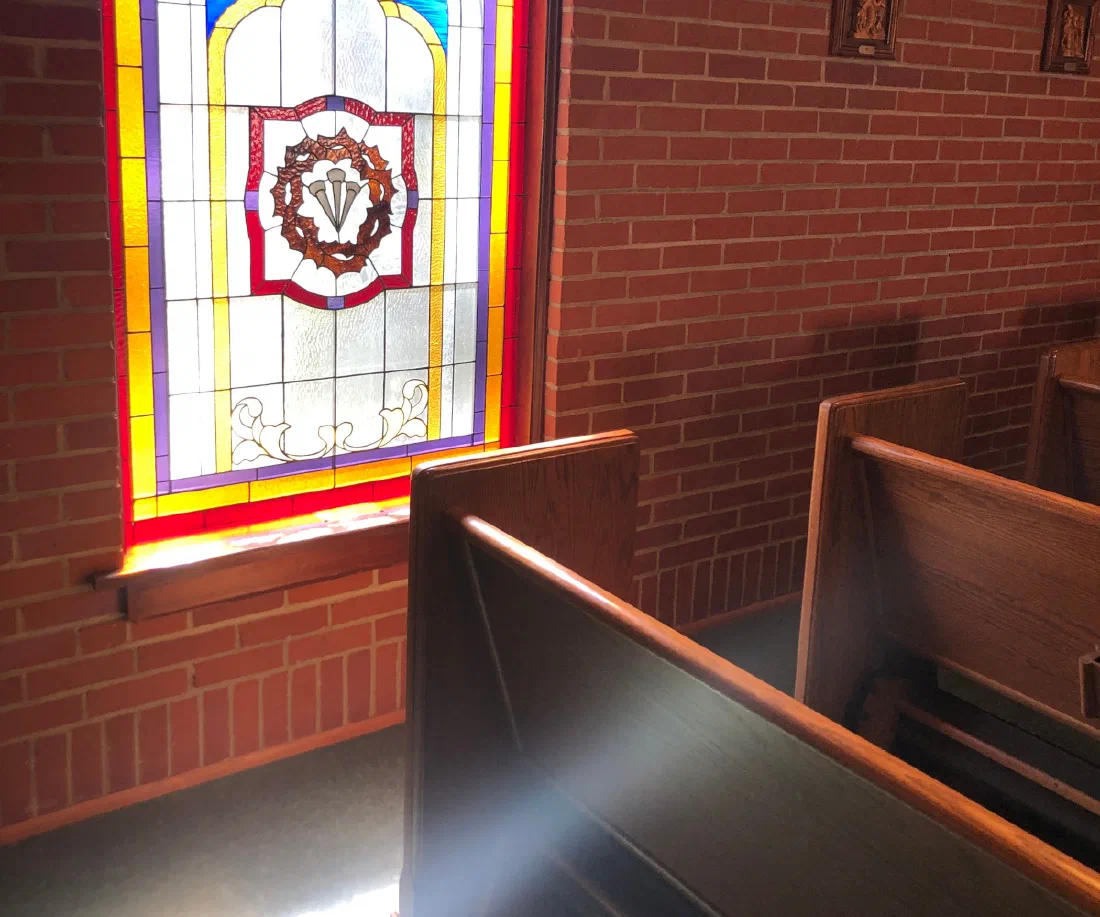
The years since have brought stained glass windows made by the parishioner Catherine Dunn, a larger parish hall, Canterbury House for University of Montevallo students, and a 150th anniversary celebrated in 2010 with the bishop, alongside a long line of faithful clergy. Today the Rev. Quincy Hall serves the parish, and the work goes on: the same table, the same welcome, the same stubborn hope.
Twice this church has been leveled, and twice it has risen again. That is not, to us, an accident of history. It is the gospel we live by, that the God who raised Jesus is mending everything that storm and time have broken, and that nothing surrendered to him is ever finally lost.
The story, year by year
- Pre-1860The few Episcopalians in Montevallo hold regular services in the Masonic Hall.
- 1860Organized under the Rev. James F. Smith, rector of St. Peter's, Talladega. A small English-style church is raised above Shoal Creek, by most accounts on Shelby Street.
- 1873A tornado destroys the first church. A Gothic-style frame church is built on the same ground, though only three Episcopalian families remain in town.
- 1920St. Andrew's becomes an organized mission, led by the bishop and Diocesan Council. Mr. Lee J. Clayton travels out from Montgomery by train, by way of Calera, to lead Sunday worship.
- 1922Seventeen communicants live in Montevallo, five of them children.
- 1930Membership holds between eleven and twenty, averaging thirteen.
- 1932In the depth of the Depression, treasurer Houston Wills writes to Bishop McDowell that it is "next to impossible" to gather any money from the congregation. The parish holds on.
- 1939An April tornado destroys the second church. The congregation gathers in Calkins Hall at Alabama College, today the University of Montevallo. One Bible survives the storm.
- 1940sThe Rev. Charles H. Douglass writes to churches across the country to rebuild the parish records lost in the storm.
- 1945Bishop Carpenter sets aside $10,105 toward a new building, and the congregation adds $785. The Rev. Conrad Myrick comes twice a month for $25.
- 1950sA neo-Gothic brick church is completed at the corner of Oak and Plowman and consecrated by Bishop Charles Colcock Jones Carpenter, the parish's third home.
- 1957The Rev. Josiah W. Ware, Jr., serves as part-time vicar; twenty-four communicants are reported.
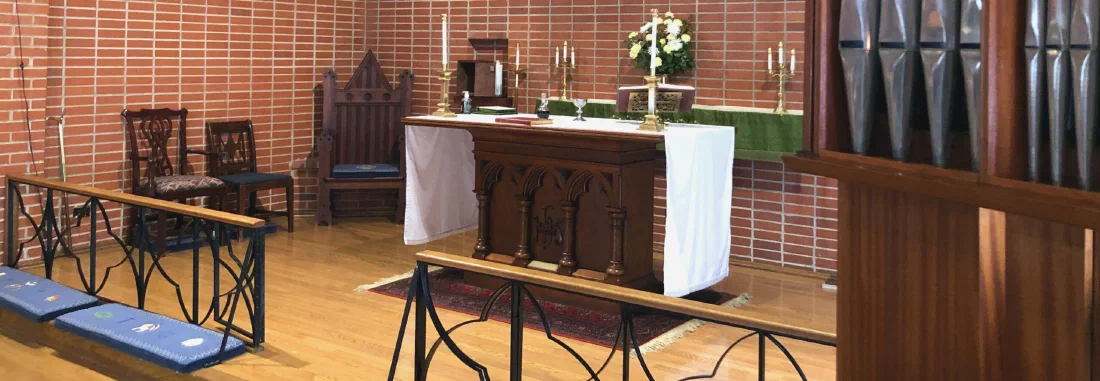
- 1958A Flentrop pipe organ is bought for $4,290. It leaves Rotterdam in April and arrives at the port of Mobile in four crates weighing 2,264 pounds. The future actress Polly Holliday sings at its first concert.
- 1960The house and property next door are bought for $13,000, with a loan from the Church of the Advent.
- 1966The Rev. Charles Kettler Horn begins serving as part-time vicar.
- 1968Dr. Benjamin Middaugh forms a choir and engages three soloists. Dr. Hendrik van Tuyll begins preaching on the Sundays clergy cannot be present.
- 1969The Diocesan Convention authorizes women to serve on vestries, and Vivian Irene Roe is elected, the first woman elected to a vestry in the Diocese of Alabama.
- 1970Dr. Katherine Vickery gives generously toward new heating and cooling for the nave.
- 1971The Rev. Jack Keith Bush arrives as the parish's first full-time resident vicar, 111 years after its founding.
- 1972Vivian Irene Roe becomes the diocese's first woman to serve as Senior Warden. The roof is replaced, and Miss Katherine Farrah gives carpeting for the whole church.
- 1973By the authorization of Bishop Stough, St. Andrew's becomes the diocese's second parish to maintain perpetual reservation of the Sacrament.
- 1974Katherine Farrah gives the parish its red vestments and altar hangings and a violet funeral pall.
- 1975Redesignated from organized mission to supported parish, with a rector and vestry.
- 1982The Rev. Joseph Lee Knott arrives with his family as the parish's second full-time resident priest, serving through 1988.
- 1989The Rev. Gates Shaw serves as part-time rector, through 1993.
- 1994The Rev. Margaret Shepard begins serving as the parish's first full-time woman rector, through 1996.
- 1998The Rev. Thomas White and the Rev. Grady Barbour serve as supply priests.
- 1999The Rev. Dr. James F. Tuohy begins ten years as part-time rector.
- 2004The Rev. Stephen R. Shanks begins serving as deacon in the parish's prayer and outreach ministries.
- 2007A 3,000 square foot addition adds a larger parish hall, kitchen, nursery, classrooms, and offices.
- 2009The Rev. John W. Wesley, Jr., begins serving as rector and campus minister.
- 2010A new Canterbury House is completed, with room for six student residents, and the parish celebrates its 150th anniversary with Bishop Henry N. Parsley, Jr.
- 2011Parishioner Judy Quick serves as deacon, through 2014.
- 2016The Rev. Tyler Richardson serves as priest-in-charge, through 2017.
- 2019The Rev. Steve DeGwek serves as priest-in-charge, through 2021.
- 2022Julia "Judy" Hamilton Lee serves as deacon-in-charge.
- 2024The Rev. Rebecca DeBow begins serving as priest-in-charge.
- 2026The Rev. Quincy Hall, ordained to the priesthood in April, begins service as priest-in-charge.
Questions & Answers
- How old is St. Andrew's Episcopal Church?
- St. Andrew’s was organized in 1860 and has worshiped in Montevallo, Alabama, ever since, which makes it more than 160 years old.
- Where is St. Andrew's located?
- At 925 Plowman Street, on the corner of Oak and Plowman in downtown Montevallo, across from Montevallo High School and one block from the University of Montevallo.
- Has the church building been rebuilt?
- Yes. A tornado destroyed the first church in 1873, and the parish rebuilt on the same ground. A second tornado leveled that church in 1939. In the 1950s the parish built a third time, the neo-Gothic brick church it worships in today at the corner of Oak and Plowman.
- Was St. Andrew's a first in the Diocese of Alabama?
- In 1969 the parish elected Vivian Irene Roe to its vestry, by available records the first woman elected to a vestry in the Episcopal Diocese of Alabama.
- Who leads St. Andrew's today?
- The Rev. Quincy Hall serves the parish, which is part of the Episcopal Diocese of Alabama and the worldwide Anglican Communion.
- When are services?
- The Holy Eucharist, Rite Two, is celebrated every Sunday at 11:30 a.m., from the Book of Common Prayer. Everyone is welcome.
- What is Canterbury House?
- Canterbury House is a six-bedroom residence completed in 2010 that continues St. Andrew’s long ministry of housing University of Montevallo students.